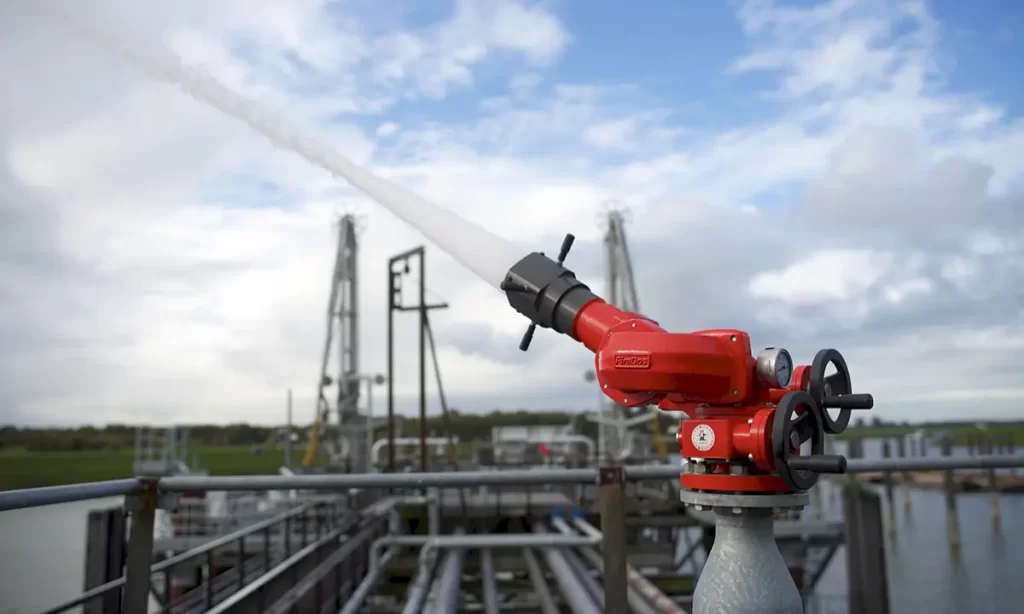
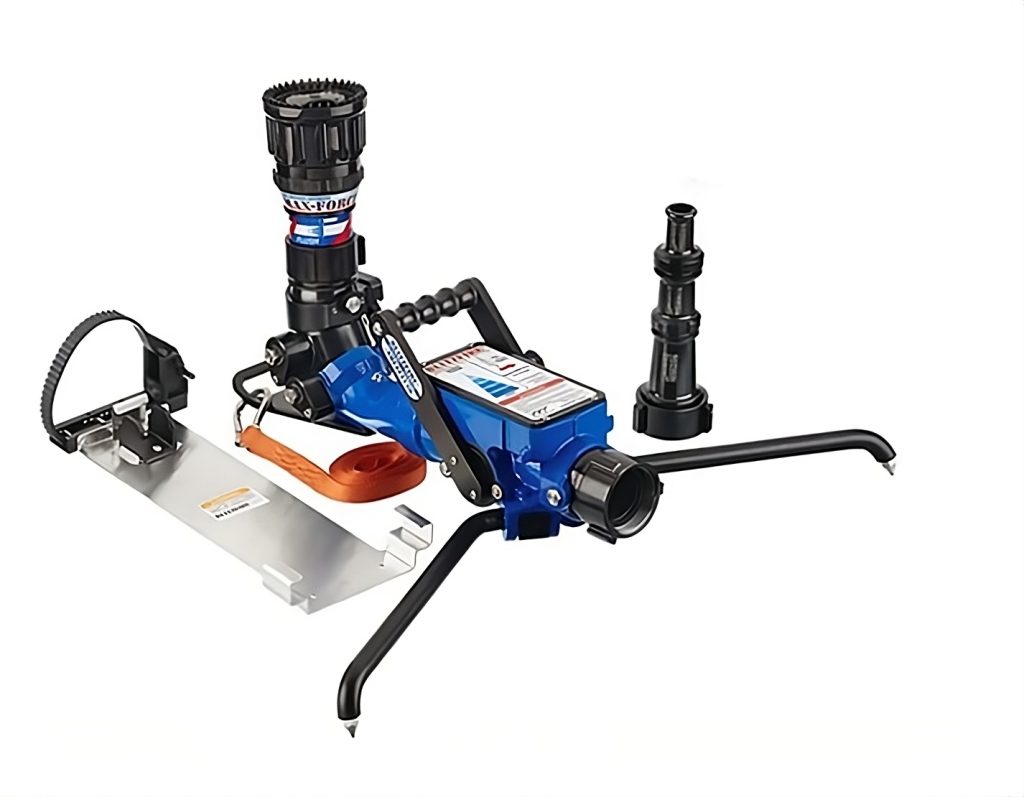
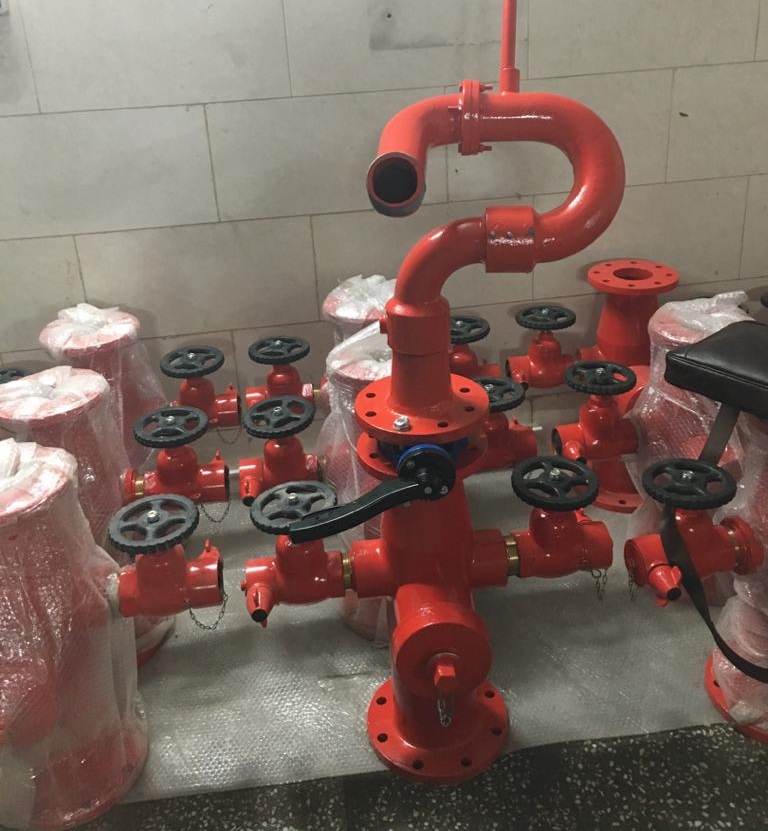
Fire monitors are high-capacity directional nozzles designed to project large volumes of water or foam over long distances. They are used in fixed or mobile firefighting systems at refineries, petrochemical plants, tank farms, and similar facilities.
• Manual Monitor – Controlled by hand wheels or levers; simple and reliable. • Electric Monitor – Operated remotely with joystick or control panel. • Hydraulic/Pneumatic Monitor – Suitable for automation or hazardous areas. • Trailer/Mobile Monitor – Mounted for easy relocation.
Construction & Materials
• Body: Ductile Iron, Bronze, or Stainless Steel. • Nozzle: Hard-anodized Aluminum or SS316 – Brass – Bronze • Coating: RAL Red • Inlet Flange: 3”– 6” PN16 or ANSI 150. • inlet connection: typically 4″, available in other size
Technical Data
Description
Typical Value
Parameter
Adjustable according to nozzle model
5000-600LPM
Flow Range
Typical system working pressure
7-7bar
Operating Pressure
Full rotation
360°
Horizontal Rotation
Adjustable spray angle
-45° ~ +90°
Vertical Movement
Throw distance up to 60 meters
Up to 60 m
Jet Range (Water)
Throw distance with foam
Up to 50 m
Jet Range (Foam)
Type of control
Manual / Electric / Hydraulic
Control Type
Features & Advantages
• High reach and flow stability. • Corrosion-resistant materials. • Smooth rotation with low torque. • Adjustable jet/fog pattern. • Optional remote control.
Applications
• Refineries, Petrochemical Plants, Power Stations. • Offshore Platforms, Tank Farms, Terminals. • Mobile Firefighting Units and Foam Systems.